


Living Heritage Atlas | Madinah
2025
︎︎︎ Project Website
Norman B. Leventhal Center for Advanced Urbanism &
Civic Data Design Lab
Sarah Williams (Director)
Ashley Louie (Project Lead)
Ghida Anouti
Maria Gabriela Carucci
Racha Doughman
Areti Kotsoni
Oluwabusola Marcus
Mercy Olagunju
Zoe Voss Lee
Mohammed Alsehali
Gehl
Jeff Risom (Project Director)
Liselott Stenfeldt (Partner, Director of Research & Development)
Amanda Gregor (Senior Project Manager)
Amira Badran (Senior Project Manager)
Guitsa Herro (Project Manager)
Jonathan Pichot (Technical Lead)
Adam Eriksson
Natalia Garcez
Madinah Region Development Authority
Abdulmajeed Manjara
Ahmed Alowfi
Ali Alanazi
Abdulaziz Juhany
Domestic Data Streamers
Pau Aleikum Garcia
Irene Altaió Carné
Raquel Bueno
Esteban Piacentino
Joana Bisbe
︎︎︎ Project Website
Norman B. Leventhal Center for Advanced Urbanism &
Civic Data Design Lab
Sarah Williams (Director)
Ashley Louie (Project Lead)
Ghida Anouti
Maria Gabriela Carucci
Racha Doughman
Areti Kotsoni
Oluwabusola Marcus
Mercy Olagunju
Zoe Voss Lee
Mohammed Alsehali
Gehl
Jeff Risom (Project Director)
Liselott Stenfeldt (Partner, Director of Research & Development)
Amanda Gregor (Senior Project Manager)
Amira Badran (Senior Project Manager)
Guitsa Herro (Project Manager)
Jonathan Pichot (Technical Lead)
Adam Eriksson
Natalia Garcez
Madinah Region Development Authority
Abdulmajeed Manjara
Ahmed Alowfi
Ali Alanazi
Abdulaziz Juhany
Domestic Data Streamers
Pau Aleikum Garcia
Irene Altaió Carné
Raquel Bueno
Esteban Piacentino
Joana Bisbe
Overview
Informed by urban planning and placemaking ideological frameworks, Living Heritage Atlas | Madinah is a design-based research project that seeks to define and document living heritage in Madinah. Living heritage consists of the everyday practices and places that are kept alive by communities today. These collectively identified stories help inform how to plan for the city's future with support for protecting places important to Madinah's local community.
As a place with deep historical and cultural significance, the city of Madinah is revered as a key destination for tourism and Islamic pilgrimage. The city received approximately 9 million visitors in 2024 and aims to double its visitors to 25 million by 2030. This influx of visitors often shifts market capitalization to favor the economic benefits of prioritizing visitor needs, while resulting in the loss of the places residents value in their cities. The Living Heritage Atlas | Madinah seeks to map living heritage for the protection and celebration of what residents value the most. Living heritage refers to the daily rituals, routines, and social practices anchored in specific sites. In collaboration with Gehl and working closely with the Madinah Region Development Authority, our team explored community-centered methods for collecting data on living heritage that were implemented in Madinah from May to June 2025.
Defining Living Heritage in Madinah
The Living Heritage Atlas | Madinah used four participatory methods—semi-structured interviews, participatory mapping, an online survey, and a public engagement installation—to create a new dataset that defines and documents living heritage in Madinah. Open-ended living heritage narratives from participants were gathered through semi-structured interviews, an online survey, and a participatory mapping workshop. Prompt questions, such as “What places in our everyday routine feel unique to Madinah?” or “What places make you feel connected to your community in Madinah?” elicited thoughtful responses that paired qualitative descriptions of these rituals with place-based information. This information was structured into a dataset that is categorized by ritual and place types to help derive insights that can be referenced in data action conversations to further discuss strategies for protecting historic neighborhoods and the living heritage identity in Madinah.
Digital Engagement Platform
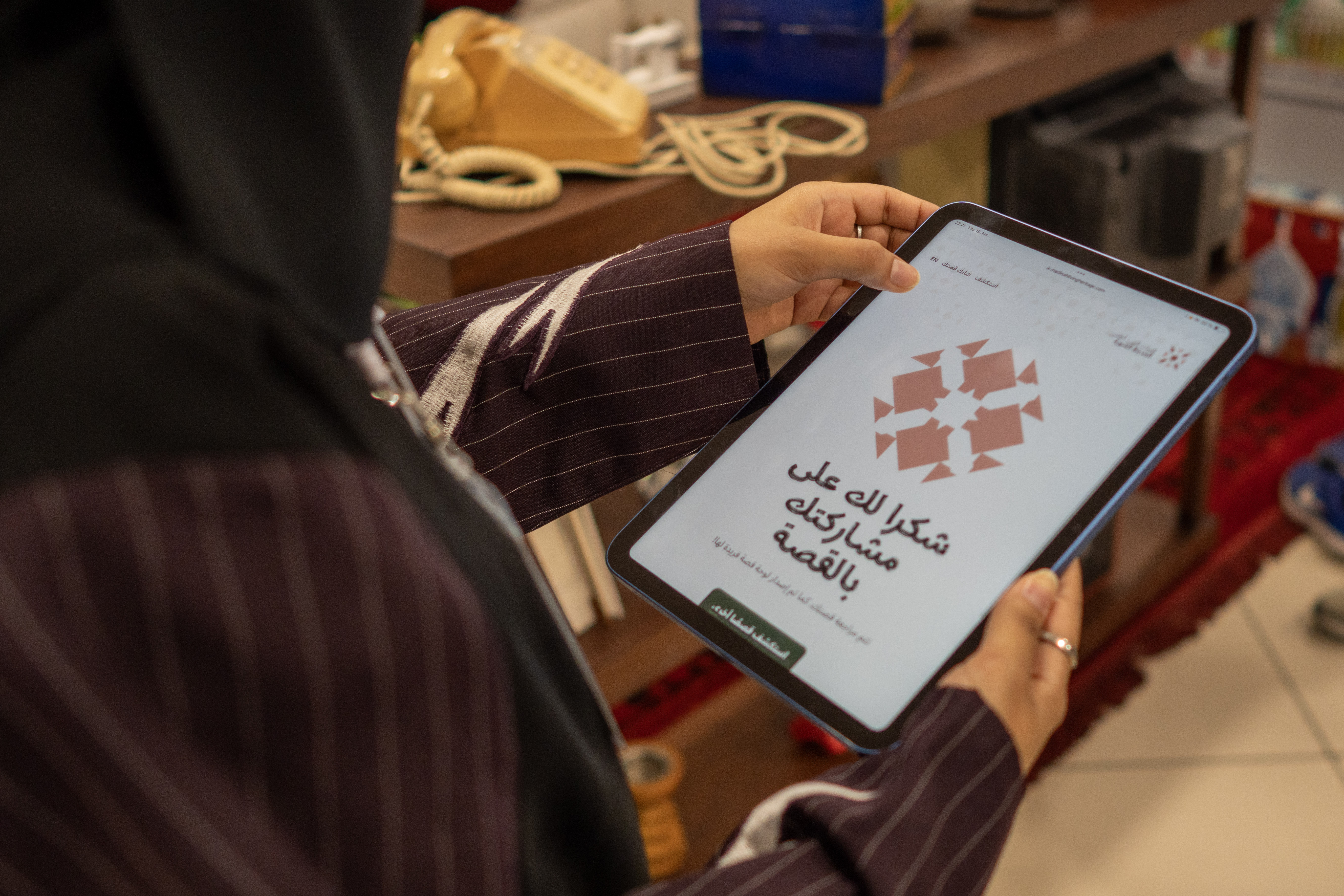
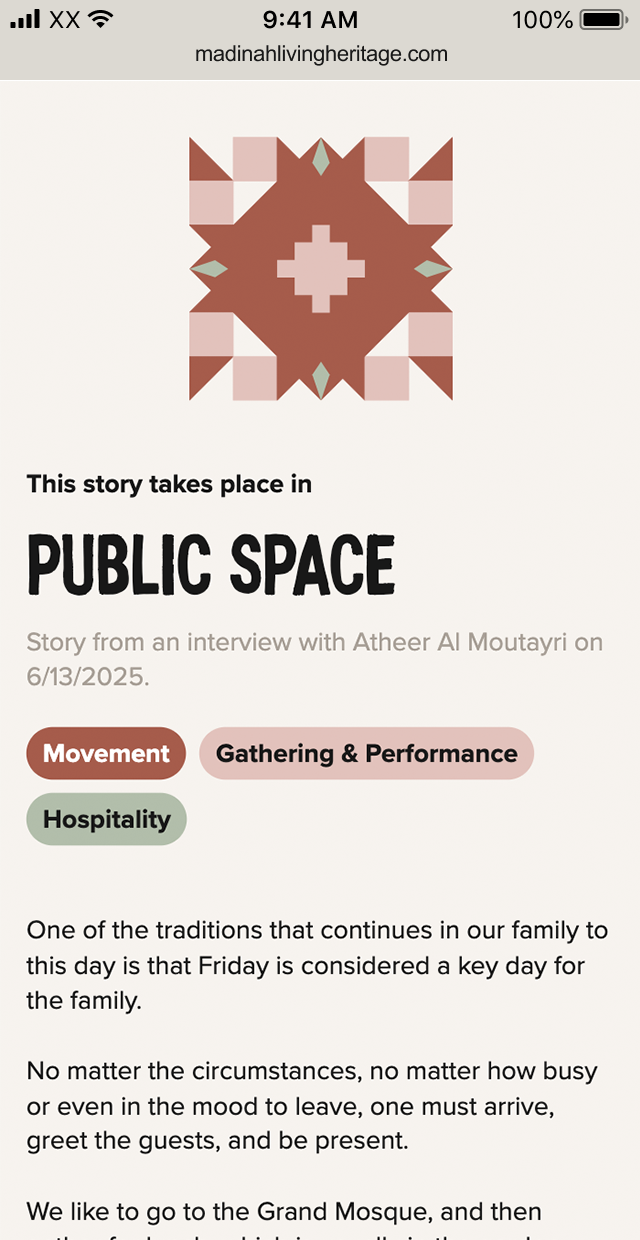
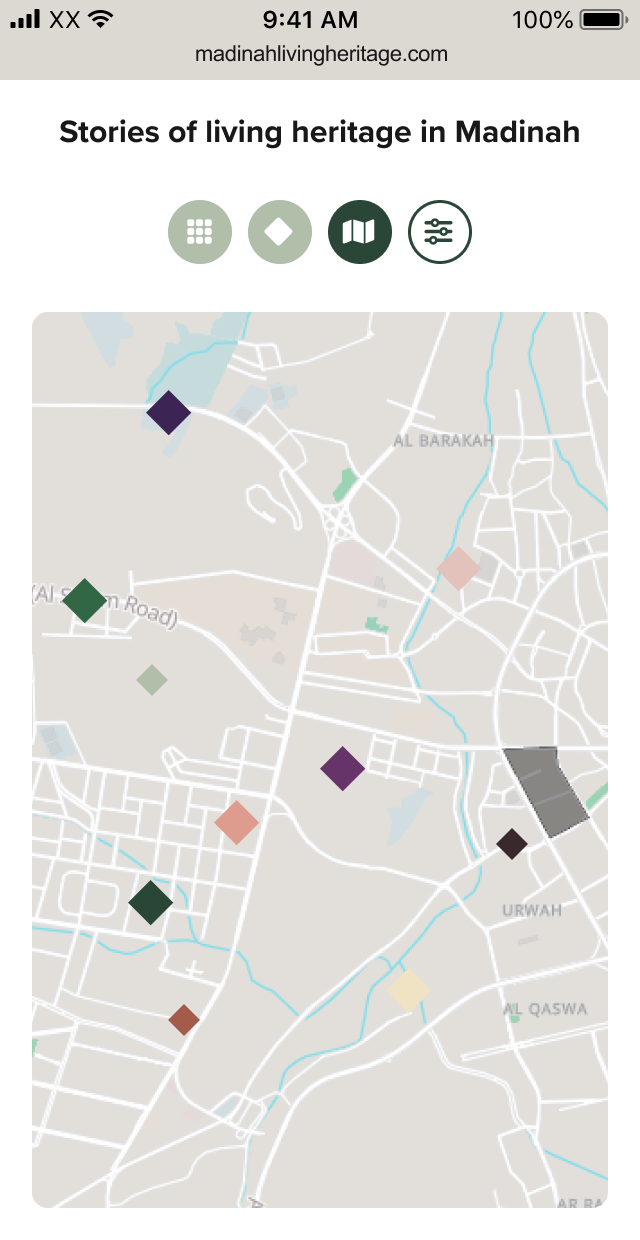
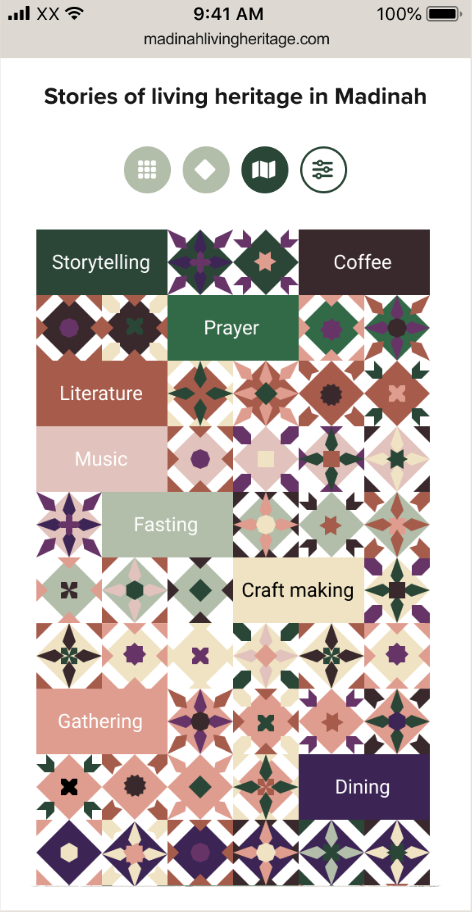
Our team engaged locals in the data collection process to bring visibility to living heritage, while creating a sense of community through these discussions. A digital engagement platform was designed and developed to broaden engagement access; the platform enables people to share their own stories, while also visualizing others’ anecdotes of what living heritage means to them. The platform allows participants to write or record their living heritage story, select related ritual category labels, and identify places in Madinah on the map where their story occurs. The digital tool also provides an opportunity for people to explore and learn from others’ perspectives to construct a collective knowledge and definition of living heritage in Madinah.
Community Participation & Engagement
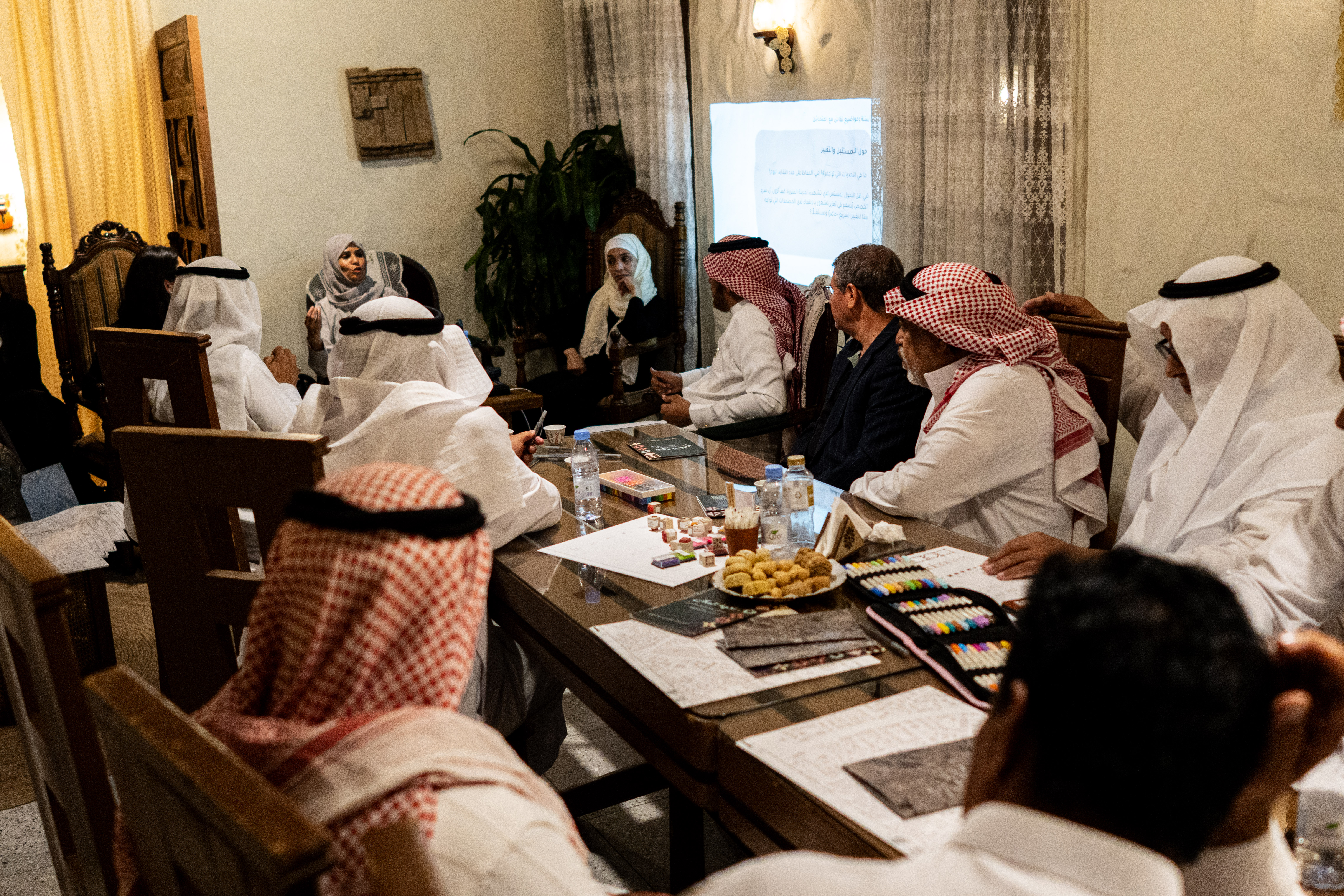
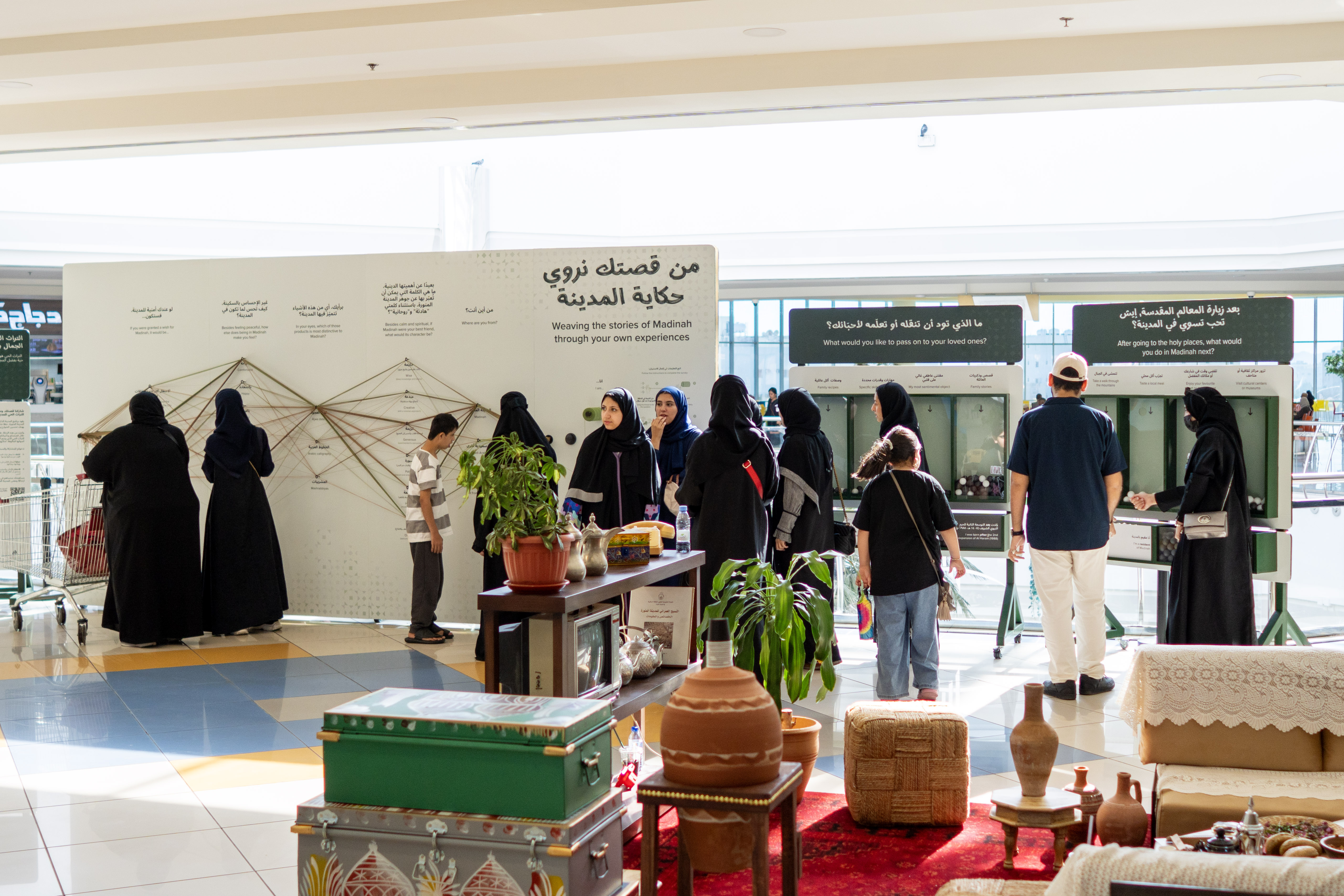
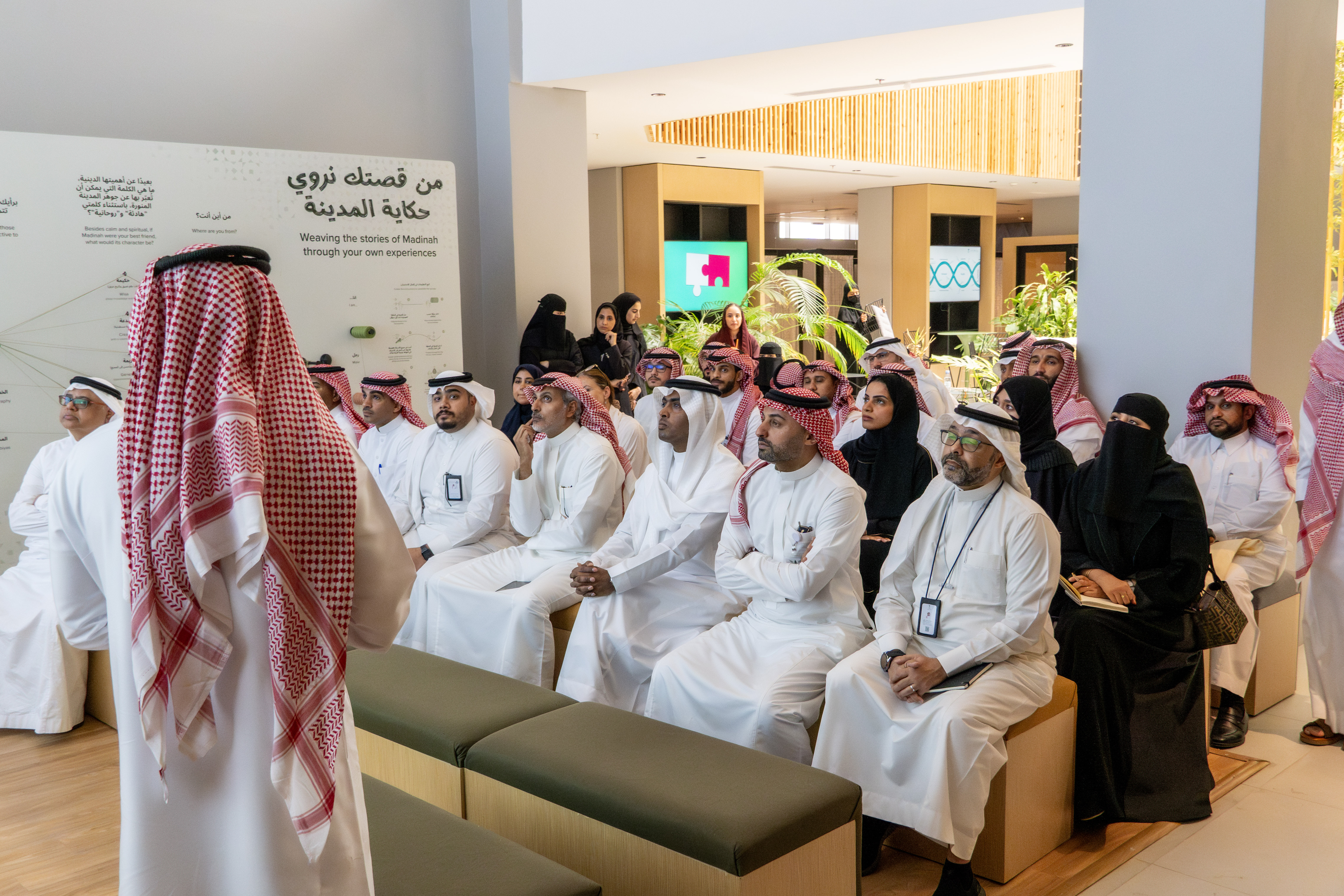
To bring awareness to and catalyze conversation about living heritage in Madinah, we designed and facilitated community engagement through a series of events that involved a participatory mapping exercise, discussions with stakeholders, and an interactive public installation, held in Madinah in June 2025.
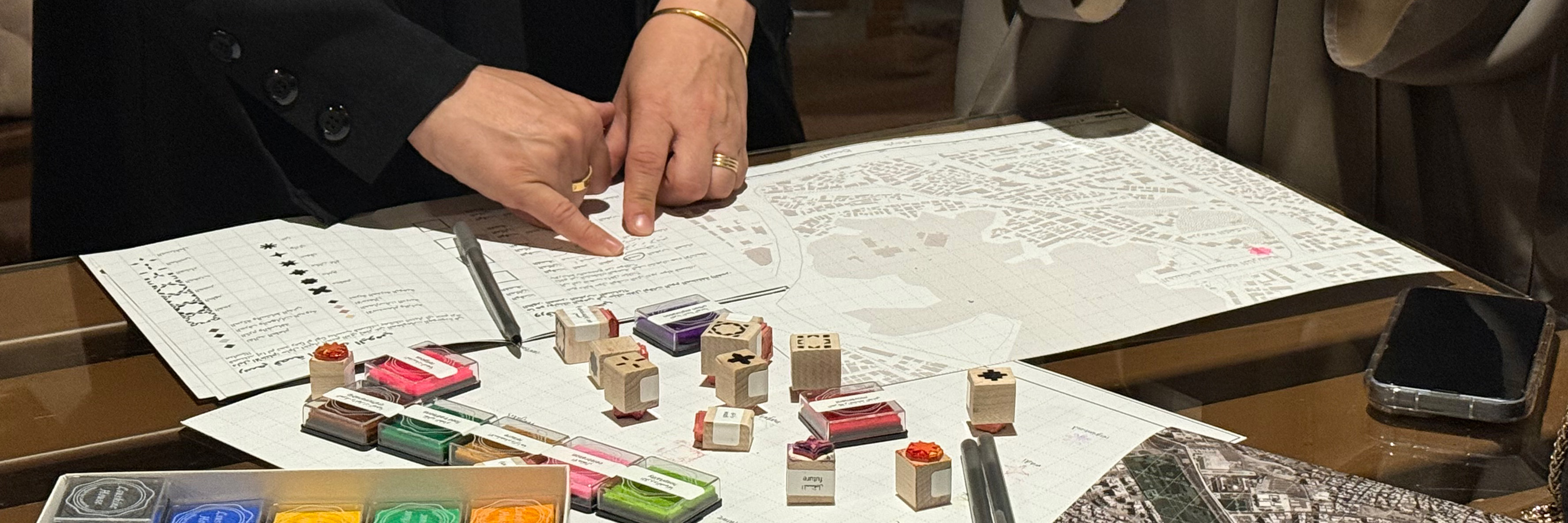
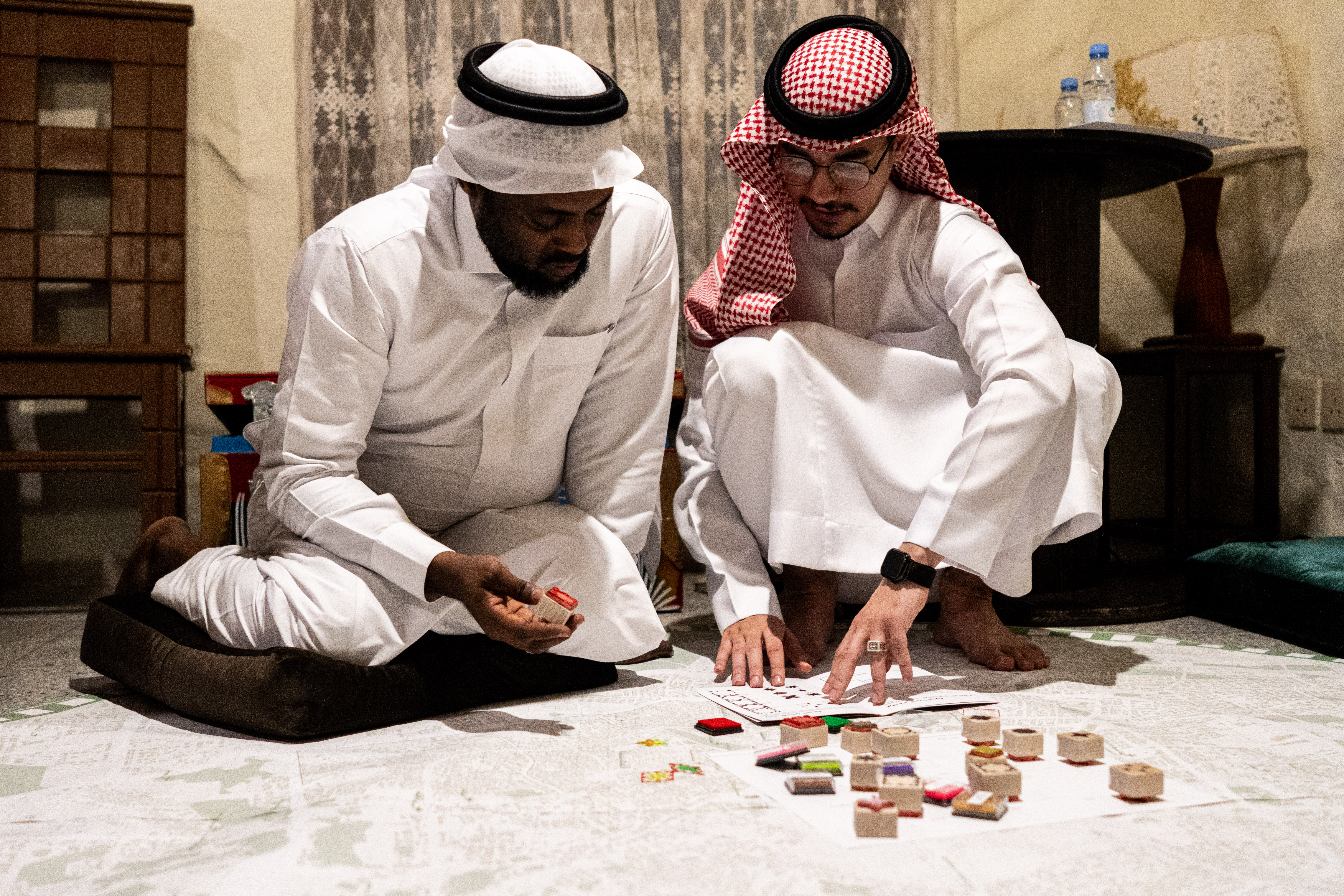
The participatory mapping exercise asked participants to map activities in their everyday routines in their neighborhood and to consider a place that embodies the identity of Madinah through the senses–sight, sound, smell, taste, touch. The mapping exercise sparked conversations about memory and place and fostered a sense of pride and community aligned with a common goal for protecting Madinah’s heritage.


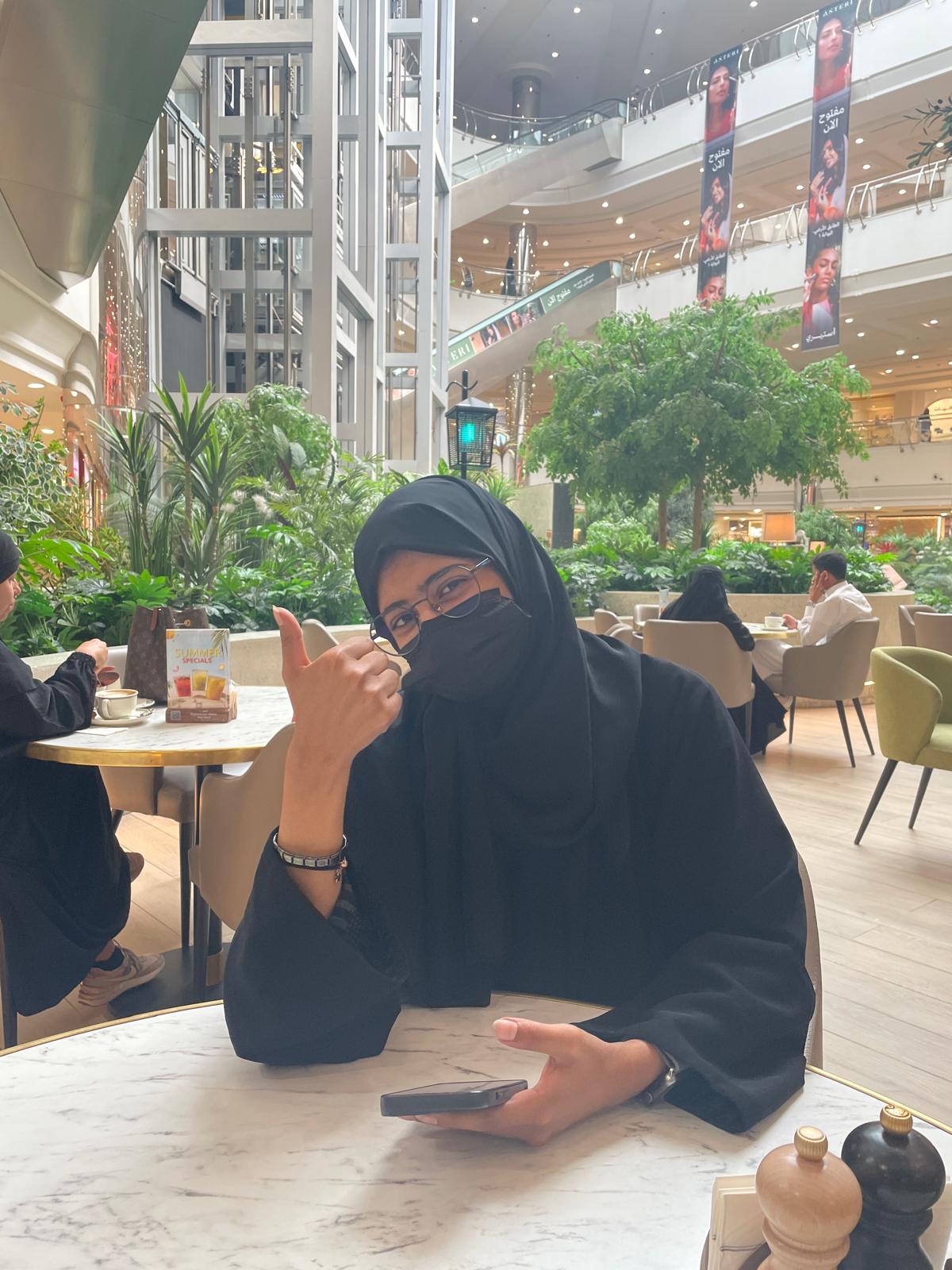
Alongside the mapping workshop, our team facilitated a panel discussion with local leaders to share their personal vocation related to Madinah’s heritage, while exploring themes of storytelling as a way to keep the traditions present and to pass this knowledge along to younger generations. A public installation was designed to engage passerbys and invite people to reflect and converse about their heritage in a traditional majalis (living room) set up in Al Rashid Mall, a public indoor space. Some of the initial living heritage data gathered through the interviews were shared with stakeholders, and these insights helped to prompt nuanced discussions that can support informed decision-making on heritage protection strategies in Madinah.
Explore the Living Heritage Atlas | Madinah database at madinahlivingheritage.com/en.
Publication
︎︎︎ Louie, A., Kotsoni, A., & Williams, S. (2026). Making Intangible Heritage Visible: Evaluating Civic Methods for Defining and Collecting Place-Based Heritage in Madinah. Land, 15(6), 993.
︎︎︎ Louie, A., Kotsoni, A., & Williams, S. (2026). Making Intangible Heritage Visible: Evaluating Civic Methods for Defining and Collecting Place-Based Heritage in Madinah. Land, 15(6), 993.